Dryers in Park West & Carolina Park that run cold, slow or loud, with the duct given a manometer reading before the heater is given the blame. 12–20 min from Long Point Road on the north run.
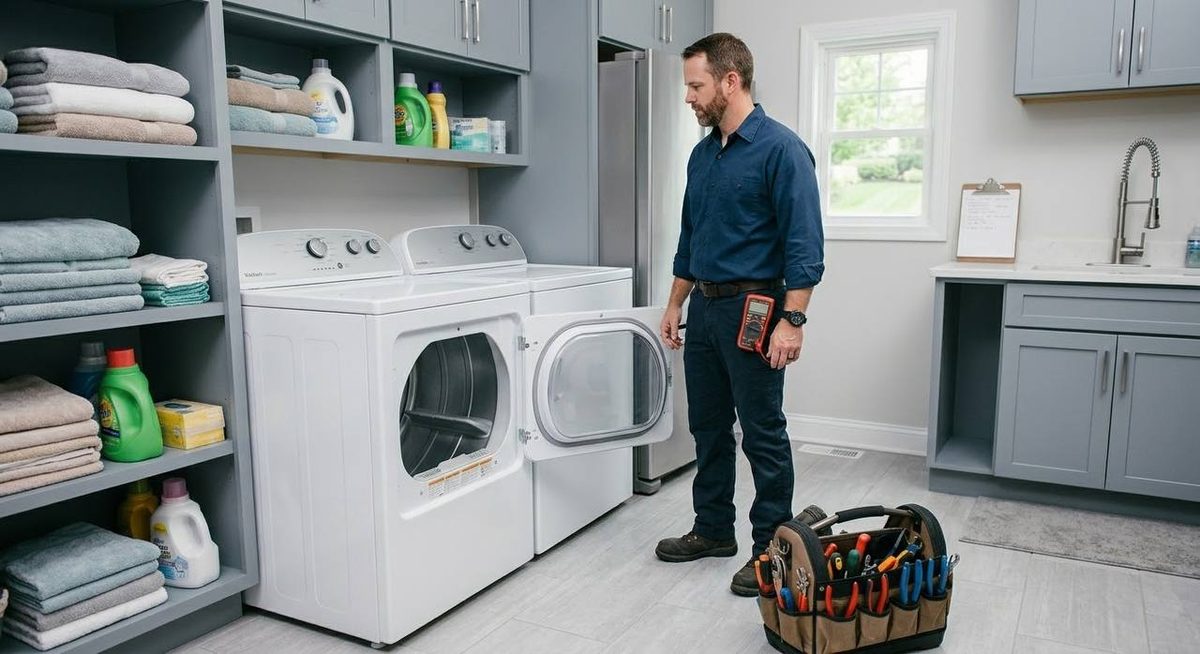
North Mount Pleasant builds its laundry upstairs and sends the dryer exhaust up into the attic and out a roof cap, and that one drawing-board choice explains most of the slow-dryer calls on the north run. Wes puts a manometer on the exhaust before he puts a meter on anything electrical.
The run is batched — Park West and Rivertowne, then Carolina Park and the Highway 41 streets, Dunes West behind its gate — and a no-heat call jumps to the front of it. The once-over starts at the blower, goes to the exhaust reading, and walks to the roof before the front panel comes off.
Dryer Repair on the north run — Park West
Before you ring
Hot at first, then lukewarm, then hot again
A squeal or a thump that tracks the drum
Another blown fuse, same summer
A hot smell on the high setting
Half of Park West seems to be replacing the same part. Same builder package, same install year, same wear curve — a pattern, not bad luck. By the time yours goes the part is more than likely already on the van.
The street’s share
Forty Feet of Attic Duct
A Park West or Carolina Park dryer exhausts up through the attic in a run that sags somewhere in the middle, collecting lint in the low point, and ends at a roof hood whose flap seizes with lint and pollen. A dryer breathing through that route runs hot, blows its fuse and takes two cycles a load with nothing inside it broken. The manometer puts a number on the loss; Wes brushes what can be reached from the machine and the roof, measures again, and writes in the ledger when a sagging attic section is a duct crew’s job rather than a new heater. A fuse on its own is a second visit booked in advance.
The builder packages add the fleet effect: the same dryer model across a street, wearing its idler pulley and rollers on the same schedule, so the set for one Park West address tends to fit the next three. Gas runs through most of north Mount Pleasant, and gas dryers get their igniter, coils and flame sensor metered in turn, stopping at the appliance valve — past it belongs to the gas company or a plumber, and the ledger says which.
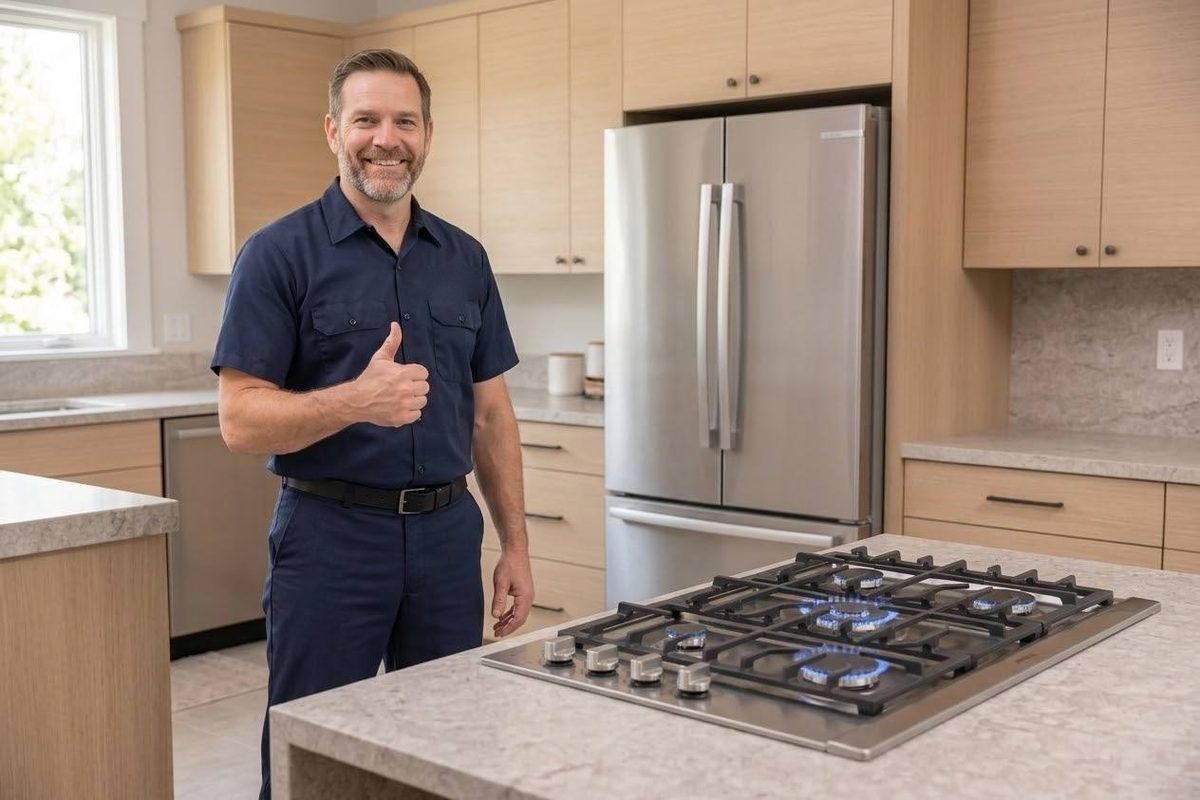
Worth knowing on this run. The acreage lots toward Wando and the 41 edge run propane, and a gas dryer still jetted for natural gas burns orange out there and is slow to light until the conversion kit goes in. Heat-pump dryers are turning up in the newest Carolina Park houses; they get their own once-over — filters, coil, pump, drain — and the same slip.
Three from the phone
Dryer Repair in Park West: Asked and Settled
Our Carolina Park dryer takes forever.
The attic run to the roof hood, nearly always. The exhaust reading says what it costs, and the slip is often a duct note with nothing to buy.
Third fuse since spring, Park West.
Blame the duct, not the fuse. The run is brushed as far as any brush reaches, then read again, and the ledger says whether an attic section still wants a duct crew.
Gas dryer on the 41 edge lights late and burns orange.
Most likely a dryer jetted for natural gas sitting on a propane lot. Wes converts the orifice and pressure and checks the flame; the tank is the propane supplier’s business.
Blower, manometer, hood — then the partsThe plug inspected before the part is condemnedA blue flame on all five means the jets are rightRack out, door down, pump and arm in viewOne drain cycle watched before a pump is named