How the Once-Over Runs
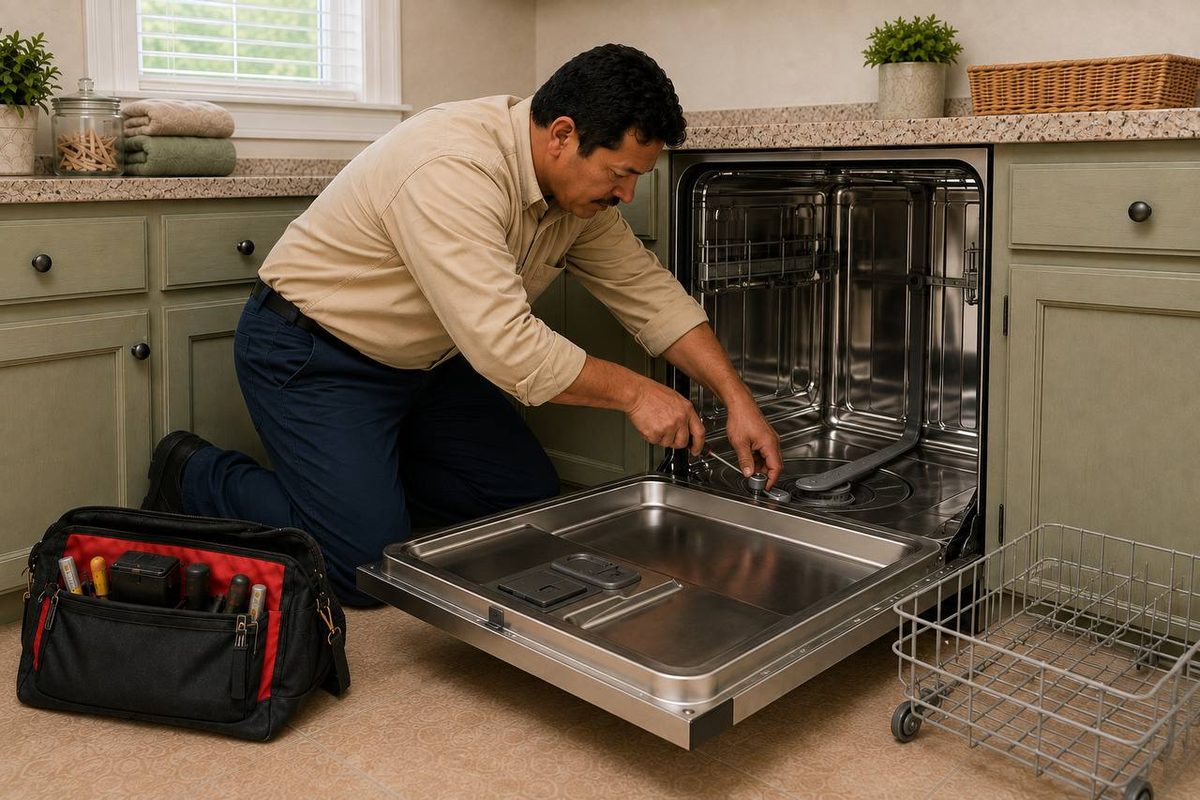
So a dishwasher once-over begins on the floor: kick panel off, a flashlight into the pan beneath the tub, the tide lines and rust read for what has been happening down there. Then a cycle runs with Wes watching — the door seating, the water level, the spray force, how fast the sump drains — and the slip is written before the racks go back.
One Water, Many Rows
Nearly everything on this map drinks the same soft aquifer water, which means cloudy glassware here is nearly always too generous a dose of detergent and rinse aid, and the honest slip is a lighter scoop rather than a pump. The exceptions are the well-fed edges — Clements Ferry, the acreage past Park West — where the cloud is mineral and a filter or a rinse-aid top-up is the cure. The ledger notes which water each kitchen drinks, so the next visit starts from there.
East Cooper’s townhome rows and condo buildings took their dishwashers in builder orders, and those machines fail in waves — the same drain pump across a row of I’On townhomes in one season, the same door latch across a Daniel Island building the next. Wes keeps the pattern in the ledger, and an HOA board or a property manager gets findings in writing that survive a meeting. Storm season adds the East Cooper special: a control board frozen halfway by a power blink, which looks dead and is not, and gets a proper reset before a board is priced.
Pumps for washing and draining, fill valves, spray arms, door gaskets, latches and boards can all be fixed at the sink once Wes knows the model; a cracked tub is the single finding no repair is worth, and when the pan shows one the slip says retire. A dishwasher that has worked itself loose from the counter — half the calls from rentals — gets bolted back down and leveled on the same visit.
- An inch of water in the bottom after every cycle
- Top-rack glasses cloudy or gritty
- Flood sensor locking the buttons
- Kick panel damp at one end
- A cycle that now runs three hours
- Tablet still in the cup when the door opens