How the Once-Over Runs
An electric oven gets a lab thermometer in the middle of the cavity across three heat cycles and a comparison with what the display thinks; the elements and the temperature sensor are then measured against the service sheet, and the control board falls under suspicion only when the cavity thermometer and the sensor tell different stories. A gas range gets igniter current, the valve and orifice, and a look at the flame at each burner. An induction cooktop gets its coils and its power board read zone by zone. Nothing on this van is jumped out — a bypassed thermal switch is no repair, and the ledger will never record one.
Induction in the New Builds, Gas Along 17, Pro Ranges in the Old Village
Carolina Park, Point Hope and the newest Daniel Island streets went in with induction cooktops, and induction fails in ways that look expensive and often are not: a single dead zone is a coil or a relay, a cooktop that will not recognize a pan is a sensor, a unit that trips its own breaker is frequently a power board. Wes reads the zones and the board before anything is priced, and the slip separates the cheap fault from the dear one.
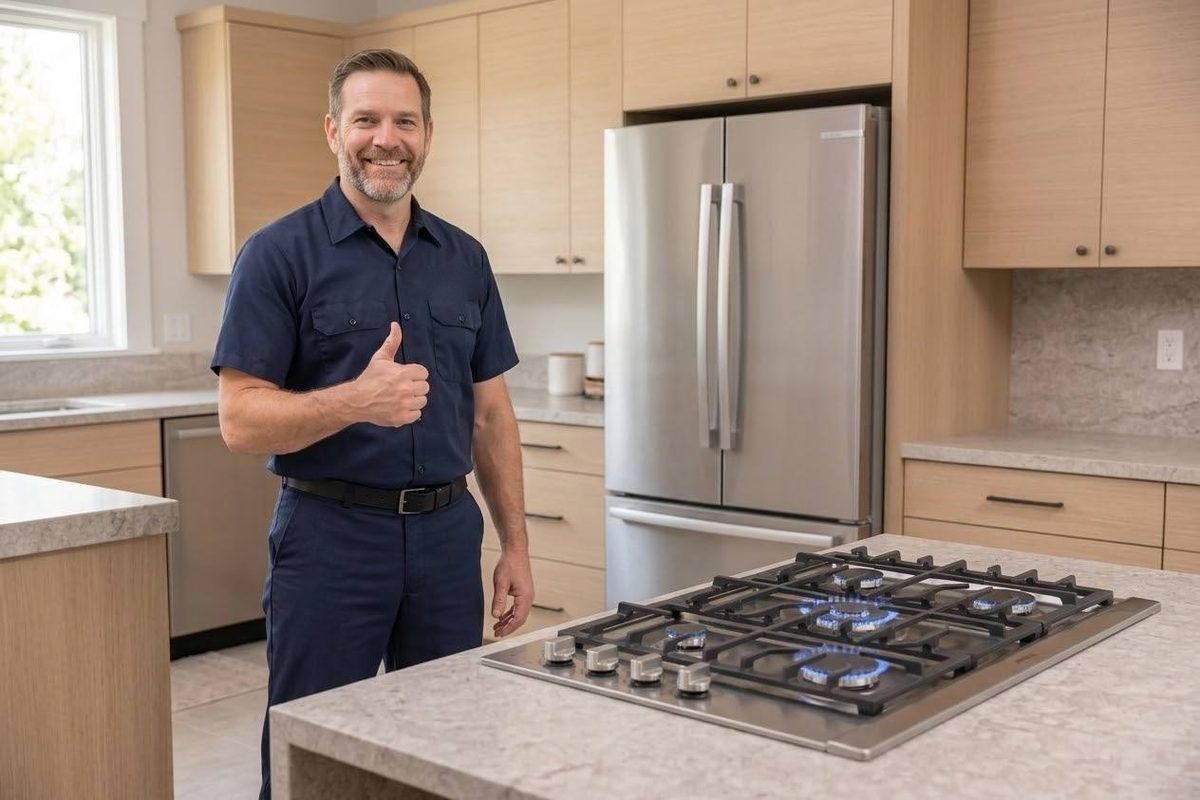
Natural gas reaches the Highway 17 corridor, Park West, Belle Hall and the newer Daniel Island neighborhoods, and gas ranges there fail at the igniter, the spark module and the valve in that order. The islands and the acreage streets run propane; a range that left the showroom jetted for natural gas gives a yellow flame and soots pans there until it is converted, which is a single visit with every burner’s flame checked afterward.
The Old Village, I’On and the Daniel Island park streets carry the professional names — Wolf, Viking, Thermador, Miele — and their faults are nearly always electronic on machines whose burners and cavities are sound: a sensor gone out of true, a relay stuck closed, a control deaf to one button. Those are good repairs, because the pricey half of the range works and the slip covers just the half that does not. Independent, no factory authorizations, said in plain words.
- Dinner runs late at the setting that used to work
- Broil dead, bake fine — or the reverse
- A burner that ticks without end
- One induction zone gone, the rest fine
- Door locked since the self-clean
- A code that returns after every reset